

When I Met Mabuni Kenzo Soke: A Journey to the Source of Shito-Ryu
Historical Record
This article documents my visit to Japan in 2003, including training within the organisation preserving the original curriculum of Shito-Ryu Karate-Do and a meeting with Mabuni Kenzo Soke.
It draws on notes recorded during the trip and on original articles written shortly afterwards, both of which were approved and are now preserved as part of the Karate Explained historical archive.
In traditional karate, lineage matters.
Many practitioners study the techniques of a style without ever seeing where those teachings originated. For some, the idea of training at the source of a system remains a distant hope.
For me, that hope became a reality in September 2003 when I travelled to Japan to train in Seito Shito-Ryu Karate-Do and had the honour of meeting Mabuni Kenzo Soke (30 May 1927 – 26 June 2005), the son of Shito-Ryu founder Mabuni Kenwa.
During that visit I trained within the organisation preserving the original curriculum of Shito-Ryu Karate-Do and was able to enter the dojo directly connected to the Mabuni family.
What began many years earlier as a personal goal became one of the most meaningful experiences of my karate journey.
Historical Context
Mabuni Kenwa (1889–1952) founded Shito-Ryu Karate-Do after studying under two of Okinawa’s most influential teachers: Itosu Anko of the Shuri-te tradition and Higaonna Kanryo of the Naha-te tradition.
Following the founder’s passing, responsibility for preserving the system was carried forward by his son, Mabuni Kenzo Soke, who maintained the original teachings, kata syllabus, and organisational structure of his father’s karate.
This visit to Japan in 2003 gave me the opportunity to experience that living lineage first-hand — not only through training, but through meeting the man entrusted with preserving it.
Seeking the Source of Shito-Ryu Karate-Do
I began training in karate in 1984. From the early years of my training, I developed a strong interest in Shito-Ryu and the history behind the system.
Like many karate practitioners, I wanted to understand where the art truly came from. Over time I began searching for a way to connect more closely with the source of Shito-Ryu Karate-Do.
Through the internet I made contact with Sakai Shihan (Sakai Kazuo), the Secretary General of the Shito-Ryu International Karate-Do Kai. After about eighteen months of correspondence and exchanging training videos, I received an invitation to travel to Osaka and stay with Sakai Shihan to learn more about Seito Shito-Ryu.
It was an opportunity I did not hesitate to accept.
Arrival in Japan
On September 11, 2003, I began my journey to Japan.
After travelling from Perth to Hong Kong and then onward to Osaka, I arrived at Kansai International Airport early the next morning. Sakai Shihan was waiting to meet me, and during our first conversation we spoke about the history and structure of Seito Shito-Ryu.
During that conversation he asked me a question that immediately captured my attention:
Would I like to meet Mabuni Kenzo Soke?
The opportunity to meet the son of the founder of Shito-Ryu was something I could not pass up.
Training in Osaka
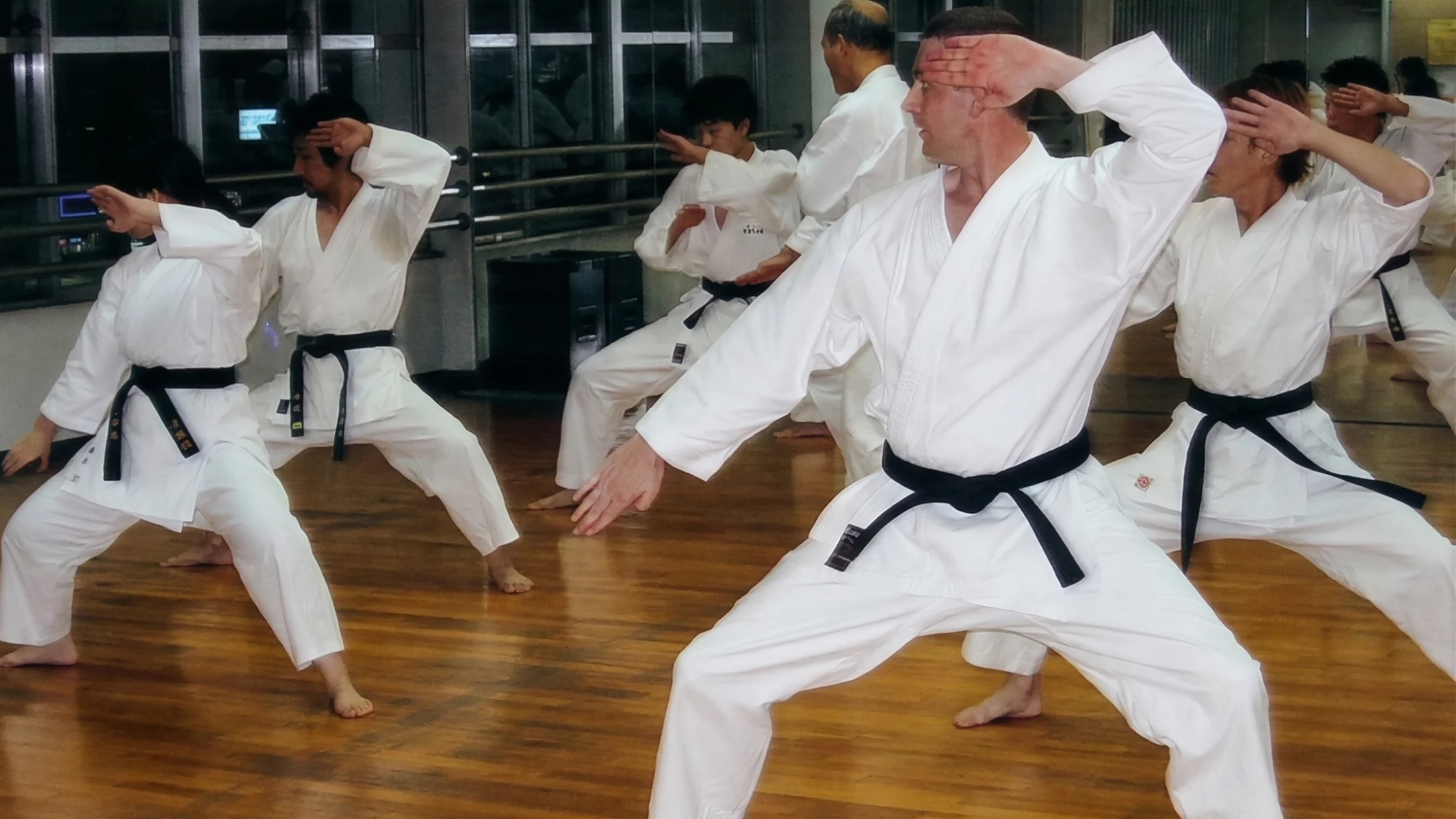
During my eight-day visit I trained at five of the twenty-five dojos that make up the Shito-Ryu Nippon Karate-Do Kai organisation.
Each training session lasted approximately two hours and was physically demanding, but every session was a valuable learning experience.
The skill and knowledge of the instructors was impressive, and what stood out most was their willingness to share their understanding of karate.
At one dojo I was fortunate enough to receive one-on-one kata instruction from an 8th Dan instructor, assisted by another instructor holding the rank of 7th Dan.
These experiences gave me a deeper appreciation for the depth of knowledge preserved within Seito Shito-Ryu.
Learning Beyond the Dojo
Some of the most memorable learning moments occurred outside the dojo.
One evening Sakai Shihan and his family took me to a popular barbecue restaurant. While waiting for a table in the car park, Sakai Shihan began explaining aspects of the kata Seipai.
Before long we were practising the kata movements in the car park.
It was an unusual place to practise karate, especially while wearing jeans, but it was a reminder that learning does not stop when formal training ends.
Meeting Mabuni Kenzo Soke at the Founder’s Dojo
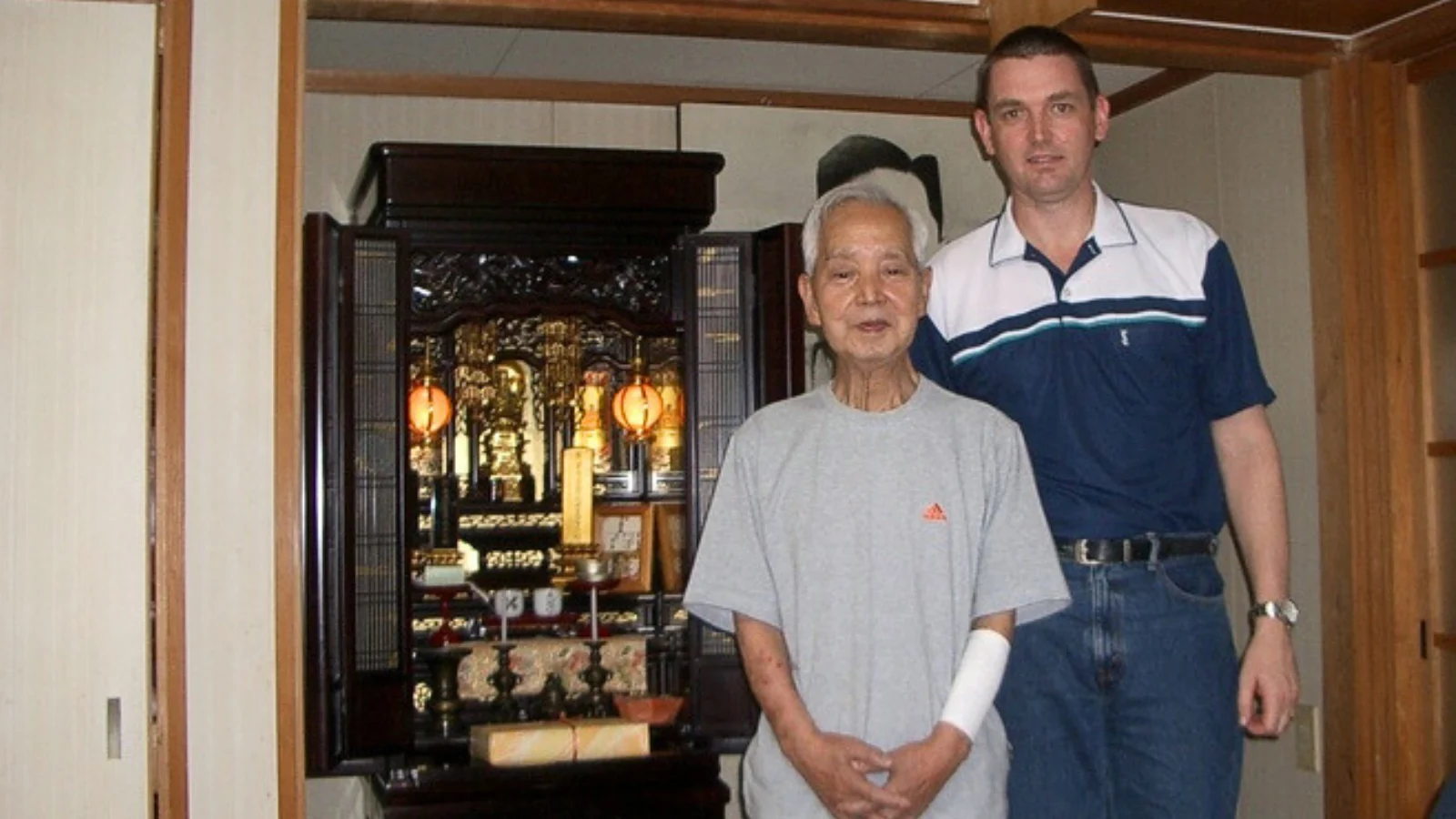
One of the most significant moments of my journey occurred on September 18, when Sakai Shihan and Fukae Shihan took me to visit the home of Mabuni Kenzo Soke in Osaka.
Attached to the house is the original dojo where Mabuni Kenwa trained and taught karate.
Entering that dojo was a powerful experience.
After removing our shoes, we knelt in seiza on the wooden floor and bowed before being invited inside by Mabuni Soke.
The moment was simple, but it carried a deep sense of history. The walls of the dojo were filled with photographs of Mabuni Kenwa, the original syllabus, and a list of kata. At the back stood a shrine honouring the founder of Shito-Ryu.
Although Mabuni Kenzo Soke did not speak English and my Japanese was limited, Sakai Shihan kindly acted as interpreter during our conversation.
During the visit I was also given permission to take photographs inside the dojo and to have a photograph taken with Mabuni Soke.
Standing in that dojo was like stepping into a living record of karate history. For me, it was both humbling and deeply fulfilling — a reminder that karate is more than technique. It is a tradition carried from teacher to student across generations.
An Unusual Grading Process
Before travelling to Japan I had expressed my intention to attempt grading for 3rd Dan.
However, the evaluation process was not conducted as a single formal examination.
Instead, my performance was observed across the entire eight days of training.
I knew that my training was being closely watched, so I made sure to give my best effort during every session.
Sakai Shihan explained that the final approval for my promotion would need to come from Mabuni Kenzo Soke after discussion by the members of the Supreme Council.
When I left Japan, I did not know whether I had successfully achieved my goal.
In December 2003 I received official confirmation that Mabuni Kenzo Soke had approved my promotion to 3rd Dan and issued my certificate on December 1, 2003.
Appointment as Representative in Australia
At the time of my visit there was no representative for Seito Shito-Ryu in Australia.
Before travelling to Japan I had already submitted an application requesting permission to represent the organisation in Australia.
During my visit I asked Mabuni Kenzo Soke if he would consider accepting my application.
The request was discussed during a special meeting and on December 6, 2003, Mabuni Kenzo Soke officially appointed me as his representative in Australia.
In Japan, the Australian organisation was registered as Shito-Ryu Australia Karate-Do Kai.
Recording the Experience
During my stay in Japan I made a habit of writing down the details of each day’s training in an exercise book.
Each evening before going to bed I recorded the lessons I had learned that day.
These notes created a permanent record of my trip and the valuable experiences I had during my time training in Japan.
Historical Archive
This article draws on original material written shortly after my 2003 visit to Japan. Those documents remain important historical records connected to this experience.
Both original articles were translated and approved in Japan before publication, making them especially meaningful archive documents connected to this journey.
Historical Archive Document 1 — Shito-Ryu’s Living Legend: Kenzo Mabuni Soke (PDF)
Historical Archive Document 2 — My Journey to the Heart of Karate-Do Seito Shito-Ryu (PDF)
What I Learned from Visiting the Source of Shito-Ryu
Travelling to Japan and entering the dojo attached to the home of Mabuni Kenwa provided insights that are difficult to fully grasp through books, photographs, or video alone.
Several lessons stood out clearly during my visit.
1. Tradition Is Preserved Through Practice
One of the most striking aspects of training in Japan was the seriousness with which the traditions of karate were preserved. The syllabus, kata, and methods of instruction reflected teachings passed down from the founder without unnecessary modification.
2. Humility Is a Fundamental Part of Karate
Before entering the dojo attached to the Mabuni family home, we knelt in seiza and bowed respectfully before being invited inside. That simple act reminded me that karate is not only about technical skill. It is also about humility, respect, and appreciation for what has been handed down to us.
3. Learning Happens Everywhere
Some of the most memorable learning moments occurred outside the dojo. During my stay, Sakai Shihan discussed kata, history, and principles during everyday activities. On one occasion we even practised kata in a restaurant car park while waiting for a table.
4. Responsibility Comes with Lineage
Being appointed as the representative for Seito Shito-Ryu in Australia was an honour, but it also carried responsibility. It reinforced the idea that those who teach karate are not simply passing on techniques. They are helping to preserve a tradition entrusted to them through generations of practice and guidance.
Looking back on that visit, meeting Mabuni Kenzo Soke remains one of the most meaningful moments of my karate journey.
More than the grading or the appointment, it was the opportunity to stand at the source of the art and gain a deeper appreciation for the responsibility that comes with practising and teaching traditional karate.
A Continuing Journey
The journey to Japan in 2003 marked an important milestone in my karate path.
However, like all karate training, it was not an ending.
It was simply another step in a lifelong journey of learning.
The deeper we look into the history and traditions of karate, the more we realise that we are part of something much larger than ourselves.
Karate is a lifelong journey of learning.
In that sense, we are all — always — Forever a Student.
Share Now & Help Others Learn!
Enjoyed this article? Continue your journey inside the Karate Explained Community.
Join free to access discussions, early releases, and member-only insights — all designed to support your growth on and off the dojo floor
Forever a Student. Forever improving